
DGX Spark 64GB vs 128GB vs Strix Halo: Which Local AI Box Should You Buy in 2026?
On October 2, 2026, NVIDIA reshuffled its entire desktop AI lineup: a new 64GB DGX Spark at $4,999 — and a 128GB model repriced at $6,950. Meanwhile, AMD Strix Halo mini PCs offer the same 128GB of unified memory from $1,999. Here’s the honest breakdown of what each option actually gets you.
Affiliate Disclosure: This article contains affiliate links. MiniPCDeals.net participates in the Amazon Associates program and manufacturer affiliate programs, and may earn a commission on qualifying purchases at no extra cost to you. Prices shown were checked on October 6, 2026 and can change quickly during the current memory shortage.
For most local AI users in October 2026, a Strix Halo mini PC like the Minisforum MS-S1 Max ($3,799, in stock) is the better buy: 128GB of unified memory at nearly half the price of the DGX Spark 128GB. The DGX Spark remains the right choice only if you depend on CUDA, NVIDIA’s FP4 acceleration, or plan to cluster units over ConnectX-7. The new DGX Spark 64GB at $4,999 runs models up to ~100B parameters, but it costs more than the 128GB model did at launch — and a 128GB Strix Halo box gives you double the memory for $1,200 less. Skip it unless you’re buying into the NVIDIA ecosystem for professional reasons.
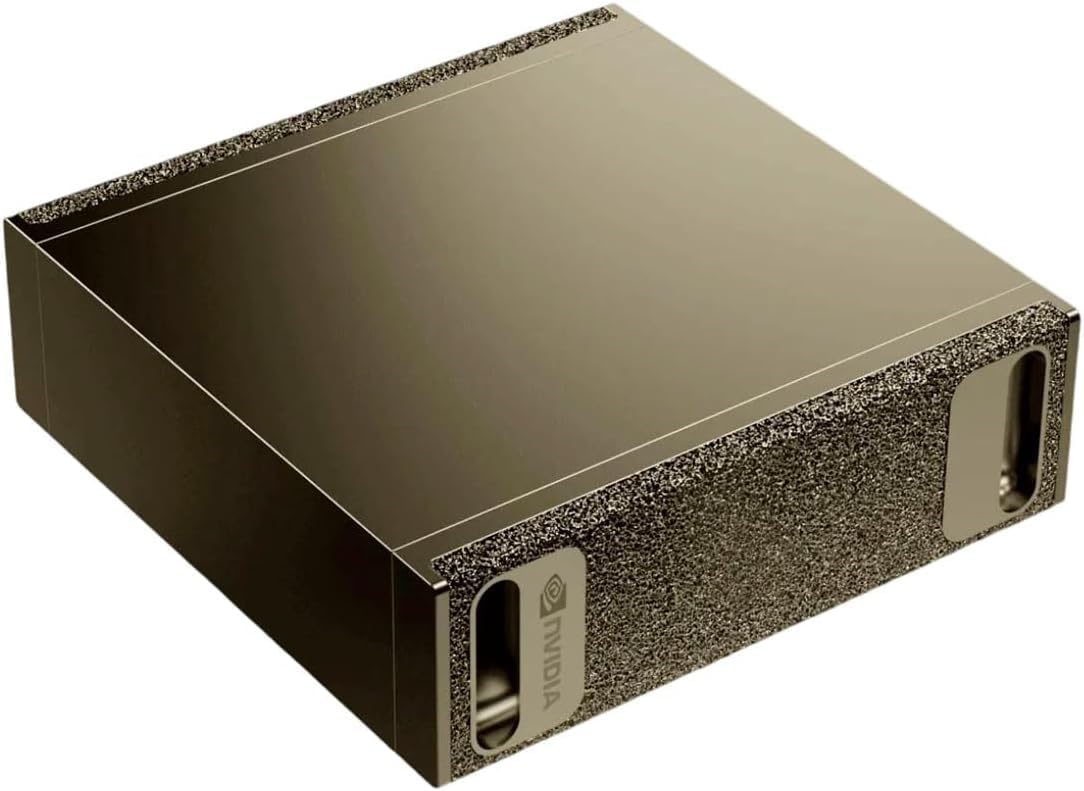
The October 2026 Shake-Up: What NVIDIA Just Did
On October 2, 2026, NVIDIA made two simultaneous moves: it announced a new 64GB DGX Spark at $4,999 — and raised the 128GB model’s price to $6,950, nearly 75% above its launch price a year earlier.
The timing is not a coincidence. The global memory shortage — what Tom’s Hardware has been calling the “RAMpocalypse” — has made the 128GB of LPDDR5X unified memory inside every GB10 Superchip dramatically more expensive to build. Unified memory isn’t commodity DDR you can source from a cheaper supplier; it’s tightly integrated into the Grace-Blackwell package. When DRAM prices rise, the 128GB Spark absorbs the hit directly.
NVIDIA’s answer is a two-tier lineup:
- DGX Spark 64GB — from $4,999, on sale October 23, 2026, exclusively through OEM partners: Acer, ASUS, Dell, Gigabyte, HP and MSI. There is no NVIDIA-branded Founders Edition of the 64GB model.
- DGX Spark 128GB — now $6,950, up from $4,699 (the February 2026 price) and from $3,999 at launch in October 2025.
The uncomfortable headline fact: the new “budget” 64GB model costs $1,000 more than the 128GB model did when it launched — for half the memory. That tells you everything about where memory pricing is in late 2026.
Memory manufacturers have indicated that DRAM supply will stay tight through at least 2027, with capacity increasingly allocated to AI datacenter demand. Every vendor in this comparison — NVIDIA, AMD partners, Apple — is exposed to the same input costs. If you’re planning a local AI purchase in the next 12 months, the direction of travel is up, not down.
DGX Spark Price History: From $3,000 Concept to $6,950 Reality
The DGX Spark was announced as Project DIGITS at CES 2025 with an expected price around $3,000. It launched at $3,999, was raised to $4,699 in February 2026, and now sits at $6,950 for the 128GB model.
| Date | Event | Price |
|---|---|---|
| January 2025 | Project DIGITS announced at CES | ~$3,000 expected |
| October 2025 | DGX Spark 128GB / 4TB Founders Edition launches | $3,999 |
| February 2026 | First price increase — NVIDIA cites worldwide memory supply constraints | $4,699 |
| October 2, 2026 | 128GB model repriced — second increase | $6,950 |
| October 23, 2026 | 64GB model launches via OEM partners | from $4,999 |
OEM pricing for the 128GB models varies widely by configuration and region — European distributor listings in October 2026 range from about $5,660 (Lenovo ThinkStation PGX, 1TB) to over $9,000 (ASUS Ascent GX10, 2TB). The $6,950 figure is the US reference point for the standard 128GB/4TB configuration.
DGX Spark 64GB vs 128GB: What You Actually Lose
Nothing in performance — everything in capacity. The 64GB model keeps the same GB10 chip, the same 20-core Arm CPU, the same Blackwell GPU, the same 273 GB/s memory bandwidth and the same ConnectX-7 networking. Half the memory is the only difference, and NVIDIA rates it for models up to 100 billion parameters instead of 200 billion.
| Spec | DGX Spark 64GB | DGX Spark 128GB |
|---|---|---|
| Starting price | $4,999 | $6,950 |
| Chip | GB10 Grace Blackwell | GB10 Grace Blackwell |
| Unified memory | 64GB LPDDR5X | 128GB LPDDR5X |
| Memory bandwidth | 273 GB/s | 273 GB/s |
| Max model size (NVIDIA rating) | ~100B parameters | ~200B parameters |
| Fine-tuning headroom | LoRA up to ~30B class | LoRA/QLoRA up to 70B |
| Storage | Reduced (partner configs) | Up to 4TB NVMe |
| Networking | ConnectX-7 200 Gb/s | ConnectX-7 200 Gb/s |
| Software | DGX OS + full NVIDIA AI stack | DGX OS + full NVIDIA AI stack |
| Availability | Oct 23, 2026 — OEM only | Now — NVIDIA + OEM |
NVIDIA’s pitch for the 64GB model is that open models in the 26–35B class — Qwen3 27B is the cited example — are now good enough to run coding and research agents locally around the clock. That argument holds for inference. It is much weaker for fine-tuning, where 64GB gets tight quickly: LoRA fine-tuning of a 70B model was one of the original reasons to buy a Spark, and that workload now effectively requires the $6,950 model.
As a rough guide: model parameters × ~2 bytes at FP16, × ~1 byte at 8-bit, × ~0.5 byte at 4-bit quantization — plus 15–25% overhead for context and runtime. A 70B model at 4-bit needs ~40GB (fits on the 64GB Spark); at 8-bit it needs ~80GB (requires the 128GB model). Plan around the precision you actually intend to run, not the marketing headline.
NVIDIA DGX Spark 128GB — CUDA, FP4, ConnectX-7 clustering
Now $6,950. If your workflow is built on NVIDIA’s stack, this is still the door in.
The Strix Halo Alternative: Same Memory, Half the Price
AMD’s Ryzen AI Max+ 395 (“Strix Halo”) mini PCs offer up to 128GB of unified memory at 256 GB/s bandwidth — nearly identical to the DGX Spark — for $1,999 to $3,799. They run llama.cpp, Ollama, LM Studio and ROCm instead of CUDA, and all the top boxes land in the same 30–45 tok/s band on a 120B-class model.
If you’re new to this platform, read our full Strix Halo explainer. The short version: AMD put a 16-core Zen 5 CPU, a 40-CU RDNA 3.5 GPU and up to 128GB of unified LPDDR5X into a single APU, and a dozen vendors now build mini PCs around it. It has become the default hardware for the local AI community — precisely because of the price-per-GB equation that NVIDIA just made worse.
Here is the real state of the Strix Halo market in early October 2026 — note that the memory shortage hits these machines too, and several are out of stock or repriced:
| Model | 128GB Price | Stock Status | Standout |
|---|---|---|---|
| GMKtec EVO-X2 (our review · check price) | $1,999.99 list | Unavailable / restock alerts | Cheapest 128GB path — when it exists |
| Minisforum MS-S1 Max (our review) | $3,799 (sale) | In stock | Dual 10GbE, USB4 v2, PCIe slot — best overall |
| Framework Desktop 128GB | $3,449 | Out of stock | Serviceable design; 192GB successor coming |
| Beelink GTR9 Pro | $4,349 pre-sale | ~35-day ship | Fine machine, wrong price — was ~$1,999 in late 2025 |
| AMD Ryzen AI Halo Dev System | $3,999 | Direct from AMD | First-party, developer image preloaded |
The EVO-X2’s $1,999 list price is real but the configuration has been persistently unavailable; third-party marketplace listings run far above list during the shortage. Never pay a scalp premium — the entire point of Strix Halo is value per gigabyte. In this market: under ~$3,000 for 128GB is a stock-alert win, and ~$3,800 for the best-in-class box you can actually order today is the realistic going rate.
What you give up leaving NVIDIA
- CUDA and the NVIDIA AI Enterprise stack — if your workflow, employer or codebase is CUDA-native, this is the deciding factor and nothing else matters.
- FP4 (NVFP4) acceleration — the GB10’s 5th-gen Tensor Cores accelerate 4-bit inference in hardware; AMD has no equivalent.
- ConnectX-7 clustering — 200 Gb/s RDMA direct-connect between units is genuine datacenter tech; the MS-S1 Max’s dual 10GbE is excellent for a mini PC but plays in another league.
- DGX OS — a fully pre-configured, validated stack versus assembling your own ROCm/llama.cpp setup on Linux.
What you gain
- ~2× better price per GB of unified memory — the single most important metric for local LLM inference.
- A general-purpose machine — Strix Halo boxes run Windows or Linux, game at 1080p, and work as NAS, workstations or home servers. The Spark is a single-purpose Linux AI appliance.
- An open software path — llama.cpp, Ollama and LM Studio are the tools the local AI community actually uses. Our Ollama setup guide and LM Studio guide get you running in under an hour.
Minisforum MS-S1 Max — 128GB Strix Halo · Dual 10GbE · $3,799
The best Ryzen AI Max mini PC, and the one actually in stock. Runs 120B-class models at 30–45 tok/s.
Full Comparison: DGX Spark 64GB vs 128GB vs Strix Halo
| DGX Spark 64GB | DGX Spark 128GB | MS-S1 Max (Strix Halo) | |
|---|---|---|---|
| Price | $4,999 | $6,950 | $3,799 |
| Unified memory | 64GB | 128GB | 128GB |
| Memory bandwidth | 273 GB/s | 273 GB/s | 256 GB/s |
| Price per GB | ~$78/GB | ~$54/GB | ~$30/GB |
| Max model (rated) | ~100B | ~200B | ~120B+ (quantized) |
| AI stack | CUDA + FP4 | CUDA + FP4 | ROCm / llama.cpp |
| Clustering | ConnectX-7 200Gb/s | ConnectX-7 200Gb/s | Dual 10GbE |
| OS | DGX OS (Linux only) | DGX OS (Linux only) | Windows / Linux |
| General-purpose use | No — AI appliance | No — AI appliance | Yes — full PC |
| Availability | Oct 23, OEM only | In stock | In stock |
The Clustering Math: Two 64GB Units ≠ One 128GB Deal
NVIDIA’s new Sync Cluster Assistant makes linking two Sparks nearly automatic — two 64GB units pool into 128GB and run ~200B models. But at ~$10,000 for the pair versus $6,950 for a single 128GB unit, clustering is an upgrade path, not a savings strategy.
The October software update is genuinely the most interesting part of the launch: the Sync Cluster Assistant detects connected units, validates their configuration and sets up the 200 Gb/s ConnectX-7 link itself — work that previously meant CLI time and hand-edited vLLM flags. NVIDIA’s own benchmark claims up to 1.7× the performance of a single unit on Qwen3 27B — vendor data, so treat it as a ceiling, and note that it’s not 2×.
Where clustering does make sense:
- You already own one Spark and want to scale later without replacing it
- You need double the compute and bandwidth (546 GB/s aggregate), not just capacity
- You’re building toward a 4-node experiment — the cheapest entry into multi-node NVIDIA AI infrastructure that exists
Where it doesn’t: if your goal is simply “128GB of unified memory for the least money,” one MS-S1 Max at $3,799 beats two Sparks at ~$10,000 by a factor of 2.6.
The next AMD generation — Ryzen AI Max+ PRO 495 with 192GB of unified memory — is shipping now in the Minisforum MS-S1 MAX-P495 ($7,399) and GMKtec Evo-X5 Pro (from $6,799), with the Framework Desktop 192GB ($6,799+) following in November. If you were considering a 128GB Spark at $6,950, the 192GB AMD machines now sit at the same price with 50% more memory. Full roundup coming soon — see our Best Mini PCs for Local AI guide for current picks.
Which One Should You Buy? — The Verdict
Buy a Strix Halo box (MS-S1 Max, in stock at $3,799) if you want the most local AI capability per dollar. Buy the DGX Spark 128GB only if CUDA, FP4 or ConnectX-7 clustering are hard requirements. Skip the 64GB Spark unless your employer is paying and mandates NVIDIA.
Buy the DGX Spark 128GB ($6,950) if…
- Your workflow is CUDA-native — professional ML development, NVIDIA AI Enterprise, migration path to DGX Cloud
- You need FP4 inference acceleration or validated fine-tuning of 70B models
- You plan to cluster units over ConnectX-7 — nothing else in this class offers 200 Gb/s RDMA
Buy a Strix Halo mini PC ($1,999–$3,799) if…
- You want to run large open models at home — Ollama, LM Studio, llama.cpp, gpt-oss-120b-class models at 30–45 tok/s
- Price per GB matters — it should; it’s the metric that defines this product category
- You want a machine that also works as a Windows PC, NAS, or home server between AI sessions
Consider the DGX Spark 64GB ($4,999) only if…
- You’re a professional developer whose employer mandates the NVIDIA stack, and 26–35B-class models cover your workloads
- You explicitly plan to add a second unit later and accept paying $10,000 for a 128GB pool
- Otherwise: a 128GB Strix Halo gives you double the memory for $1,200 less. The 64GB Spark is a symptom of the memory shortage, not a good deal.
With DRAM supply expected to stay tight through 2027 and AI datacenter demand absorbing capacity, every vendor in this comparison is more likely to raise prices than cut them over the next 12 months. The Beelink GTR9 Pro went from ~$1,999 to $4,349 in ten months. If you’ve decided to buy, the cheapest month is probably this one.
See all our tested picks for local AI — from $550 to $3,800
Ranked by RAM, tokens/sec, power draw and real price.
Frequently Asked Questions
Sources & Notes
Pricing and availability sourced from NVIDIA’s October 2, 2026 announcement and newsroom post (“NVIDIA DGX Spark 64GB Gives Developers More Ways to Build and Scale Local AI”), The Register, Tom’s Hardware, ServeTheHome, and Hardware Busters reporting on the 128GB price increase. Strix Halo pricing checked on manufacturer stores (Minisforum, GMKtec, Framework, Beelink, AMD) during the first week of October 2026 — prices are volatile during the current memory shortage and shown as a snapshot. Clustering performance figures are NVIDIA vendor data; independent verification was not available at publication.